


Retail theft, break-ins, and inventory shrink can create real pressure for businesses that rely on accessible stock, tools, and equipment. The challenge is not limited to large retailers. Small stores, contractors, property managers, and commercial operations can all run into the same problem: valuable items need to stay close to the business, but everyday storage areas do not always offer much protection. A secure storage container can help fill that gap.
For many businesses, the appeal is practical. A shipping container offers on-site storage without the cost, commitment, or disruption of expanding into a larger warehouse or building addition. With the right setup, it can give a business a stronger way to store overflow inventory, equipment, records, and supplies while keeping those assets nearby and easier to manage.
How A Secure Storage Container Helps Reduce Theft Risk
A secure storage container gives businesses a tougher, more flexible way to store assets close to daily operations while making theft more difficult. Overflow stock, seasonal merchandise, tools, equipment, fixtures, records, and supplies often end up in back rooms, hallways, trailers, or makeshift storage areas that are easy to overlook and harder to control. A steel container creates a more deliberate storage space with stronger physical separation from public-facing or high-traffic areas.
That does not eliminate theft risk on its own. A container works best as part of a broader security plan that includes proper locks, smart placement, lighting, monitoring, and consistent inventory procedures. For businesses that do not want to lease more warehouse space or move materials off-site, container storage for business use can be a practical middle ground.
Adds A Physical Barrier
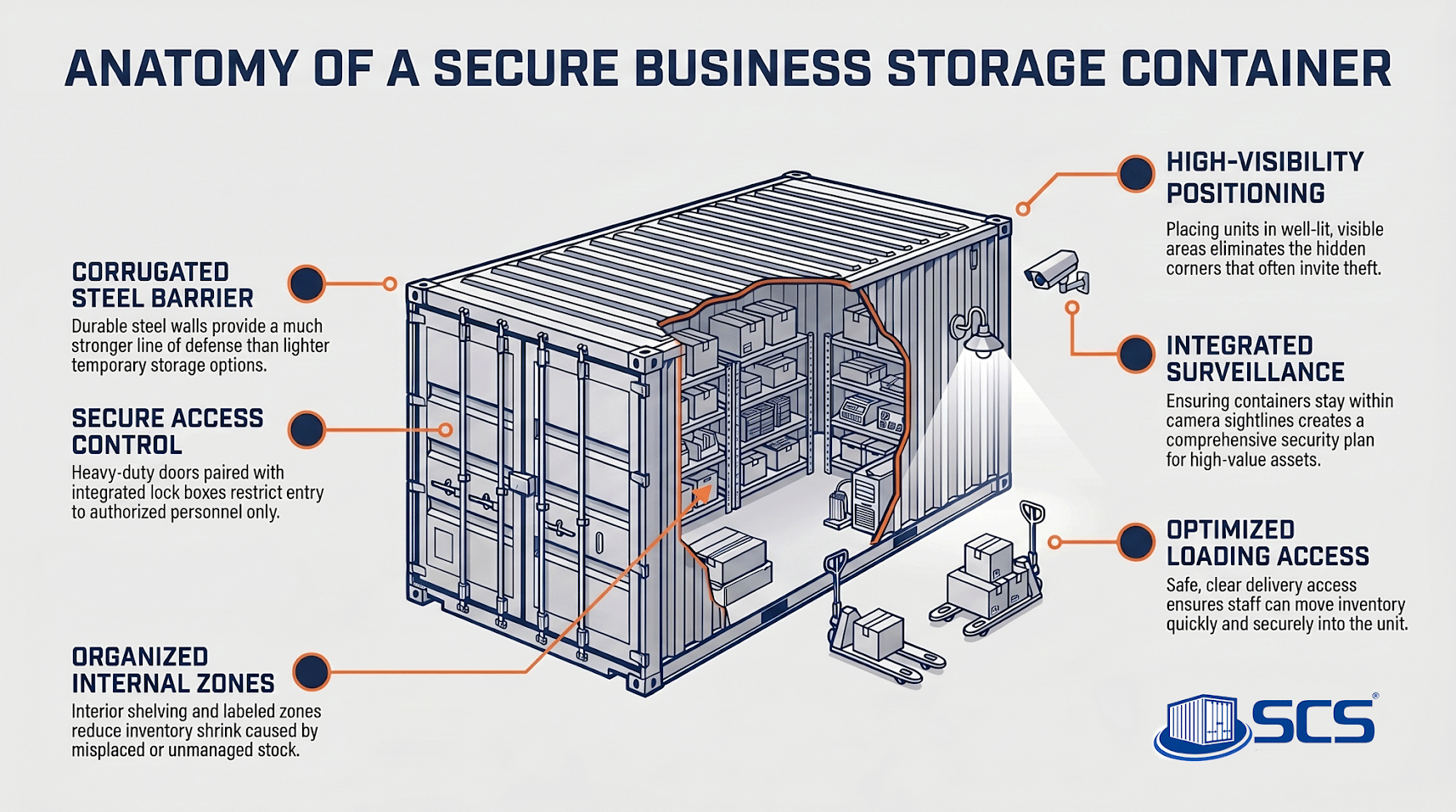
One reason businesses turn to a steel storage container is simple: it offers a much stronger barrier than lighter temporary storage options. Corrugated steel walls, heavy doors, and a solid overall structure can make unauthorized access more difficult than it would be with an outdoor shed, a partitioned back room, or an unsecured storage area behind the business.
That added barrier matters when the contents have real value. Retail stock, tools, equipment, commercial supplies, and construction materials are all easier to protect when they are stored in a durable unit designed for demanding environments. A container is not impossible to break into, but it can create a stronger line of defence than weaker alternatives.
Control Access To Stored Inventory
Physical strength is only part of the picture. A retail storage container or commercial storage container also supports better access control through lockable doors, lock boxes, and a simple process for deciding who can get in. Restricting keys or codes to approved staff can reduce casual theft, limit unauthorized handling, and improve accountability when inventory moves in and out of storage.
For businesses storing seasonal merchandise, boxed stock, tools, or promotional displays, a basic access routine can go a long way. Key logs, restricted access, and end-of-day checks can make it easier to track who opened the unit and when.
Inventory Close But Better Protected
Many businesses want stock close at hand, but not sitting in exposed back rooms, hallways, parking areas, or overcrowded workspaces. On-site container storage makes it possible to keep inventory nearby without pushing everything into customer-facing areas or relying on a separate off-site facility.
That can be useful during renovations, seasonal inventory swings, event preparation, or periods when extra supplies need to move quickly. Compared with third-party storage, an on-site unit can reduce trips back and forth while still keeping business assets separate from the main sales floor or work area.
Reduce Shrink And Misplaced Stock
Theft prevention is not only about stronger walls and locks. Poor organization can create its own losses when staff cannot find items, stock gets misplaced, or missing products go unnoticed for too long. An anti-theft storage container becomes more effective when the inside is organized with shelving, labelled zones, bins, aisle space, and inventory logs.
A well-managed unit can support receiving, backstock, seasonal turnover, and controlled restocking. It can also make audits faster and reduce blind spots that tend to appear in crowded storage rooms.
A Stronger Security Plan
Placement affects security more than many businesses expect. A container should be positioned in a visible, well-lit area whenever possible, with practical sightlines for staff and coverage from existing cameras if available. Delivery access and safe loading space matter too, since a container that is difficult to reach can become frustrating to use.
Hidden corners, poorly lit areas, and isolated sections of a property can create opportunities for theft. Before choosing a location, businesses should also consider local site rules, property layout, and access for delivery equipment.
Reduce The Need For Warehouse Expansion
Limited space and rising theft pressure often show up at the same time. A growing retailer may need room for seasonal stock just as shrink becomes harder to manage. A contractor may need a secure space for tools and materials without taking on a larger building. In cases like these, a secure storage container can add capacity on-site without forcing an immediate move into a bigger warehouse.
That flexibility can be useful during seasonal peaks, renovations, temporary projects, or periods of increased inventory when the business needs extra breathing room.
What To Consider Before Choosing A Commercial Storage Container
Start with the practical basics: the size of the container, the space available on-site, and how staff will access it during normal operations. A unit that is too small can create the same clutter problems you are trying to solve, while one that is too large may be harder to place efficiently.
Security features matter as well. Consider lock options, access procedures, lighting, and whether shelving or interior organization features would help. The condition of the container, its weather resistance, and the delivery path to your site should all be part of the decision.
It also helps to think about duration. Some businesses need short-term storage for a renovation or seasonal surge, while others need long-term capacity for ongoing operations. The right setup depends on how the container will actually be used day to day.
Find A Secure Storage Container That Fits Your Business
A secure storage container can help businesses protect inventory, reduce theft exposure, and add practical storage space without expanding into a larger warehouse. Secure Container offers shipping containers for sale for businesses that need stronger, flexible storage solutions.
Reach out to Secure Container today at (647) 560-2745 or click here to get in touch online.
FAQs About Shipping Container Storage For Businesses
Can a shipping container help prevent retail theft?
A shipping container can help reduce theft risk by adding a durable, lockable storage space for inventory, tools, equipment, and supplies. It works best when paired with proper locks, good lighting, smart placement, monitoring, and clear access procedures.
What can businesses store in a secure storage container?
Businesses often use storage containers for overflow inventory, seasonal merchandise, tools, fixtures, records, promotional materials, equipment, and commercial supplies. The best setup depends on what needs to be stored, how often staff need access, and how the container will be organized.
Is on-site container storage better than off-site storage?
On-site container storage can be more convenient when a business needs regular access to stored items. It keeps inventory close to daily operations while separating it from public-facing areas, crowded back rooms, or less secure temporary storage spaces.
How should a commercial storage container be secured?
A commercial storage container should be secured with strong lock options, controlled access, good lighting, and visible placement whenever possible. Businesses can also improve security by using inventory logs, shelving, labelled zones, and camera coverage where available.
Should businesses buy or rent a storage container?
The right choice depends on how long the business needs extra storage. Short-term projects, renovations, or seasonal inventory spikes may call for temporary storage, while ongoing inventory or equipment storage may make purchasing a secure storage container more practical.
Leave a Reply