


Take a drive past any major commercial job site, industrial park, or even a large-scale outdoor festival right now. You’re going to see them everywhere. Heavy-duty sea cans aren’t just for hauling freight across the ocean or hiding excess inventory in the back lot anymore. They’ve evolved into highly visible, highly functional pieces of commercial real estate.
But here’s the reality check: there is a massive difference between dropping a battered, rust-streaked cargo box on your property and deploying a sleek, branded asset that actually goes to work for your company.
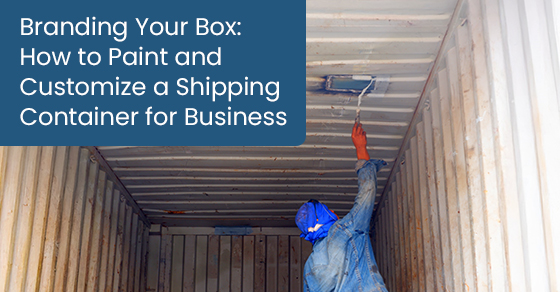
Whether you’re building out a mobile retail pop-up, a secure equipment lock-up, or a fully climate-controlled shipping container office, leaving the exterior in its original, beat-up state is a massive missed marketing opportunity. That container is essentially a giant steel billboard. It’s time you start treating it like one.
Here is the no-nonsense guide to painting, branding, and completely transforming a shipping container for your business operations.
Why Exterior Branding Actually Matters in B2B
Let’s be real—first impressions dictate trust, especially in B2B. When a general contractor rolls up to a multi-million dollar job site with a custom-painted, logo-decaled mobile office, it sends an immediate signal. It screams professionalism, organization, and stability.
Roll up with an unmodified, dented box with faded, peeling shipping logos? You just look temporary. And thrown-together.
When you invest in modified shipping containers, you’re handing yourself anywhere from 160 to 320 square feet of blank exterior canvas. Do it right, and you nail three things at once:
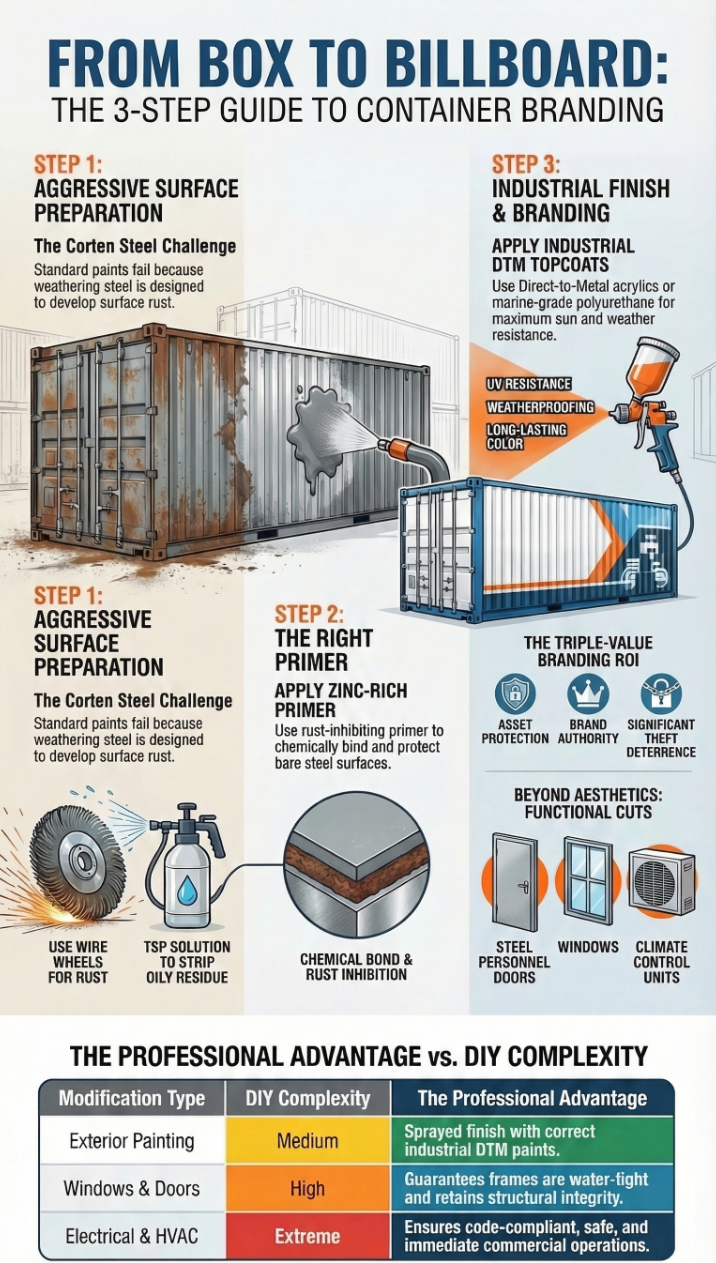
- 1. Asset Protection: Paint isn’t just cosmetic. It’s a vital barrier against the elements that adds years to the lifespan of the steel.
- 2. Brand Authority: A color-matched container reinforces your brand identity every single day it sits on the lot.
- 3. Theft Deterrence: A highly customized, brightly branded container is significantly harder for thieves to steal and fence compared to a generic, unmarked box.
The Reality of Painting Corten Steel
Listen closely: you cannot treat a shipping container like a wooden shed or a drywall interior. These things are built from Cor-Ten steel (weathering steel). It’s literally designed to develop a thin layer of surface rust to protect the metal underneath.
If you just run down to the hardware store, grab a few gallons of standard exterior house paint, and start rolling it on, I guarantee it will peel, bubble, and flake off before the first winter frost hits. Doing this right requires a serious, industrial approach.
Step 1: Aggressive Surface Preparation
A paint job is only as good as the surface it’s sticking to. You have to start by knocking off any loose surface rust and peeling factory paint. Grab an angle grinder with a wire wheel for the rough spots. Once the loose stuff is gone, hit the entire container with a high-pressure power wash. Use a commercial degreaser or TSP (Trisodium Phosphate) solution to strip away the oily residue left over from its cargo days.
Step 2: The Right Primer
Do not skip the primer. If you’re painting over spots where you ground down to bare steel, you absolutely need a rust-inhibiting, zinc-rich primer. This stuff chemically binds to the metal and stops rust dead in its tracks.
Step 3: Industrial Topcoats
For the actual color coat, you need an industrial DTM (Direct-to-Metal) paint. Water-based acrylic DTMs are solid—they dry fast, hold their color in direct sun, and flex slightly when the steel expands in the summer heat. If you want extreme, bulletproof durability, marine-grade polyurethane or epoxy paints are the gold standard. Just keep in mind they are tough to apply and usually require professional spray rigs.
Beyond the Paint: Real Functional Customizations
Slapping a fresh coat of your company’s pantone color on the outside is a great start, but serious container modifications go way past surface aesthetics.
To turn a basic box into a high-functioning business asset, you have to alter the structure. This is where you cross the line from a simple “storage unit” to a custom workspace.
- Personnel Doors & Windows: Wrestling open those massive, heavy cargo doors every time you need to grab a drill or walk into your office gets old fast. Cutting in a standard 3-foot steel personnel door and a few sliding windows completely changes the way your crew interacts with the space.
- Climate Control: Steel conducts heat and cold instantly. It’s basically an oven in the summer and an icebox in the winter. If you plan on putting employees inside—or if you’re storing temperature-sensitive gear—you need closed-cell spray foam insulation paired with a commercial HVAC unit or mini-split system.
- Custom Electrical: Running cheap extension cords through the doors is a massive safety hazard. Professional modifications involve hardwiring the container with proper breaker panels, LED overhead lighting, and dedicated 110v outlets spaced exactly where your workbenches or desks are going to sit.
DIY vs. Professional Builds: What’s the Real ROI?
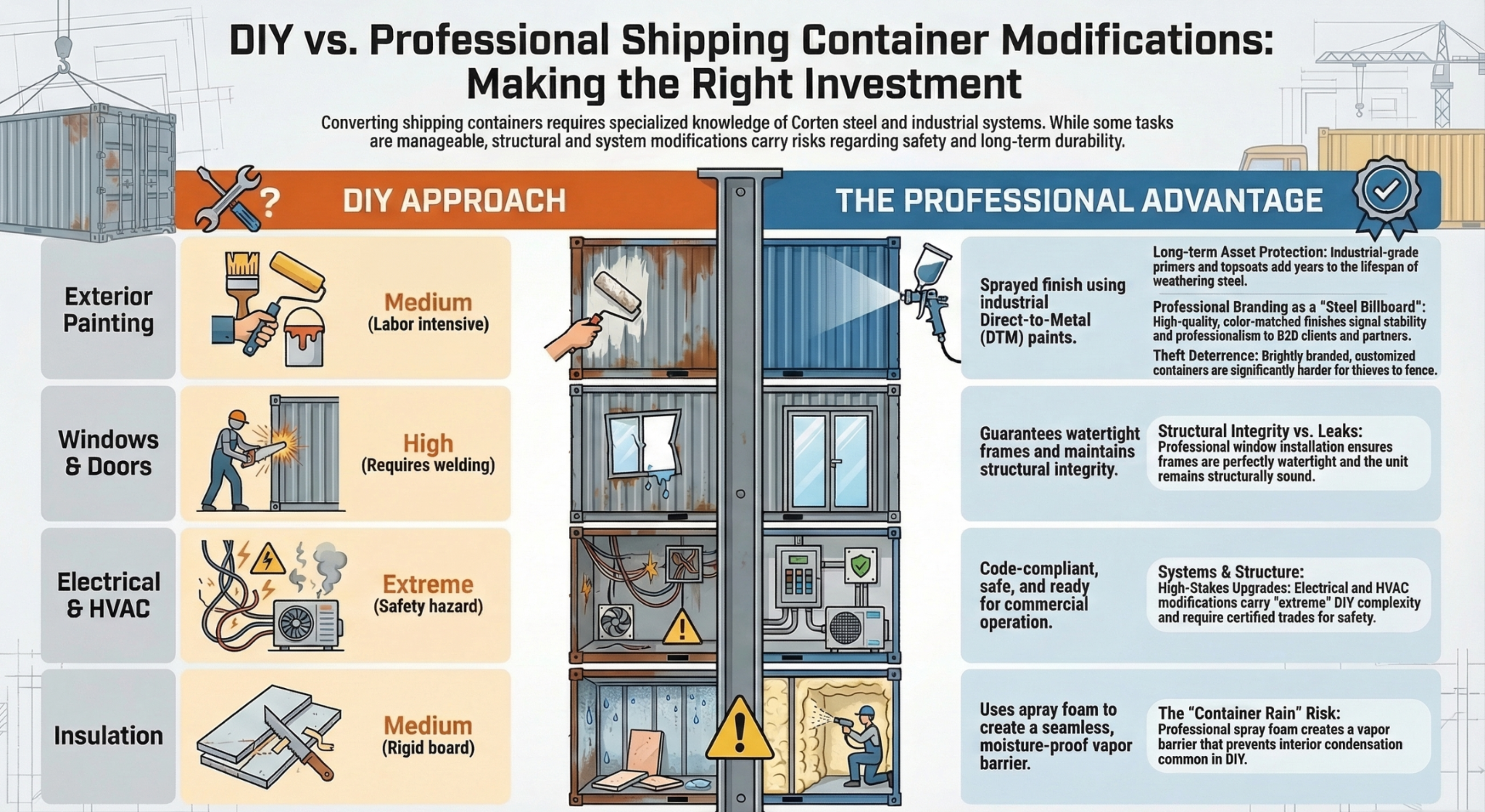
If you’ve got a handy maintenance crew, you might be tempted to tackle the build-out in-house to save a few bucks. While painting is definitely a weekend job for a motivated team, structural cuts and electrical work carry real risks. Let’s break it down.
| Modification Type | DIY Complexity | The Professional Advantage |
|---|---|---|
| Exterior Painting | Medium (Labor-intensive prep) | Sprayed finish looks vastly superior to rolled; correct industrial DTM paints are utilized. |
| Installing Windows/Doors | High (Requires plasma cutting & welding) | Retains the container’s structural integrity; guarantees frames are perfectly water-tight. |
| Electrical & HVAC | Extreme (Requires certified trades) | Code-compliant, safe, and ready for immediate commercial operations. |
| Insulation | Medium (If using rigid board) | Pros use spray foam, creating a seamless vapor barrier that stops interior “container rain” completely. |
Local Innovation: The Mobile Business Boom
We are watching this exact strategy play out in industrial hubs everywhere right now. Take a drive through the developing tech and manufacturing sectors in kitchener, for example, and you’ll see a distinct shift. Fast-growing operations are ditching restrictive commercial leases and pivoting to modular, scalable container setups.
They realize that investing in a fully customized, branded container gives them an asset they actually own. It’s an asset they can pick up and drop at the next job site, festival, or expansion lot the second they need to.
Getting Started on Your Custom Build
Your brand’s physical presence matters—even when it’s sitting in the grit of a construction yard or an overflow lot. Upgrading your temporary structures from generic eyesores to professional, branded workspaces is quite simply one of the smartest operational marketing moves you can make.
Whether you just need a custom-painted lockbox to match your fleet vehicles, or you want to engineer a fully insulated, wired, and branded mobile workspace from scratch, partnering with a dedicated fabrication team is the best way to protect your investment.
Ready to stop blending in and start building? Explore our complete gallery of shipping container modifications to see exactly how we can engineer and brand a custom solution for your specific business.
Contact Secure Container Solutions today. Call: (647) 560-2745
Leave a Reply