


Disaster recovery planning is no longer something businesses can leave for someday. Severe storms, flooding, power outages, supply interruptions, equipment failures, and unexpected site damage can all disrupt operations with little warning. For business owners and operations managers, the question is not only how to respond after an emergency, but how to keep critical assets protected before one happens.
Storage plays a major role in that plan. Supplies, tools, records, backup equipment, inventory, and temporary response materials need a secure place to stay accessible. That is why many businesses are turning to shipping containers as practical disaster recovery storage. They offer strength, flexibility, and on-site access without the time and cost of building a permanent structure.
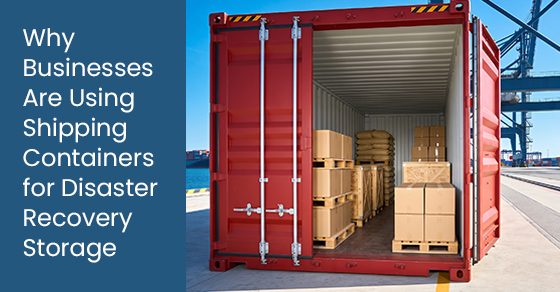
Emergency Storage Containers: A Reliable Solution for Disaster Recovery
Emergency preparedness depends on having the right materials in the right place when disruption hits. An emergency storage container gives businesses a secure, flexible way to protect essential supplies and equipment before, during, and after an event.
Durability and Weather Resistance
Shipping containers are built for demanding transport environments, which makes them well suited to outdoor storage. Secure Container describes standard shipping containers as weather-resistant, steel-built units that can withstand seasonal temperature changes and outdoor applications.
For disaster recovery, that durability matters. A storm preparation storage setup may need to protect pumps, temporary barriers, signage, tools, generators, packaged supplies, or cleanup materials from rain, wind, and impact. During flood recovery, a container can also keep replacement inventory or equipment away from damaged indoor spaces while repairs are underway.
No storage solution removes every risk, but a steel container provides a stronger barrier than many temporary sheds or improvised storage areas.
Security for Valuable Equipment and Supplies
Emergency supplies are only useful if they remain available when the business needs them. Containers offer a lockable steel structure that can help protect valuable items from theft, vandalism, and exposure.
For many businesses, disaster recovery storage may include expensive or sensitive assets: backup equipment, power tools, records, replacement parts, communications equipment, first-aid supplies, or emergency inventory. Secure Container notes that storage containers provide an accessible and secure option for storing valuable items, with steel construction offering an anti-theft barrier.
A secure emergency storage plan can be especially helpful for construction sites, warehouses, retail locations, and facilities that need materials close by but not inside the main building.
Portability and Rapid Deployment
A permanent storage building stays where it is. A container can move with the needs of the recovery plan.
That mobility can be useful when a business needs temporary storage at a damaged site, a secondary location, or a staging area. A container may be delivered to a property before storm season, moved closer to a work zone during recovery, or relocated once repairs shift to another part of the site.
Portability also supports phased response. A business may begin by storing emergency supplies on-site, then use the same container for debris management tools, replacement inventory, or backup equipment as recovery continues.
Scalability for Different Business Needs
Not every business needs the same amount of emergency storage. A small retail operation may need a compact container for backup stock and recovery supplies, while a larger industrial site may need multiple containers for equipment, documentation, and temporary operations.
Secure Container offers a range of sizes, including 10-foot, 20-foot, 40-foot, 40-foot high cube, and 45-foot high cube containers. That range allows businesses to match storage capacity to the scale of their operation rather than overcommitting to permanent space.
Storage needs can also change during different stages of a disaster plan. Before an event, the focus may be on emergency supplies. During recovery, the same container may hold tools, damaged equipment awaiting assessment, or materials needed to reopen.
Cost-Effective Disaster Recovery Storage
Building new storage space can be expensive, slow, and impractical for businesses that only need emergency capacity at certain times. A backup equipment storage container can provide usable space without requiring a full construction project.
Containers also offer long-term value because they can be reused for different purposes. A unit purchased for disaster recovery may later support seasonal inventory, renovation storage, jobsite materials, or temporary overflow. Secure Container notes that its containers can be used for equipment, inventory, records, and supplies stored on-site.
For businesses trying to strengthen emergency readiness without overspending, that flexibility can make containers a practical middle ground.
Versatility Across Industries
Different industries use containers in different ways. A construction company may store tools, safety gear, temporary fencing, or backup materials. A retailer may protect seasonal stock or replacement fixtures. A healthcare-related business may need secure space for non-clinical supplies, records, or emergency facility materials. An agricultural or industrial operation may use a container for equipment, parts, and maintenance supplies.
Modification options can also expand how a container is used. Secure Container offers custom modifications and specialty units for project-specific needs. Depending on the intended use, businesses may consider shelving, lighting, ventilation, climate control, partitions, or lock upgrades.
Key Considerations When Choosing an Emergency Storage Container
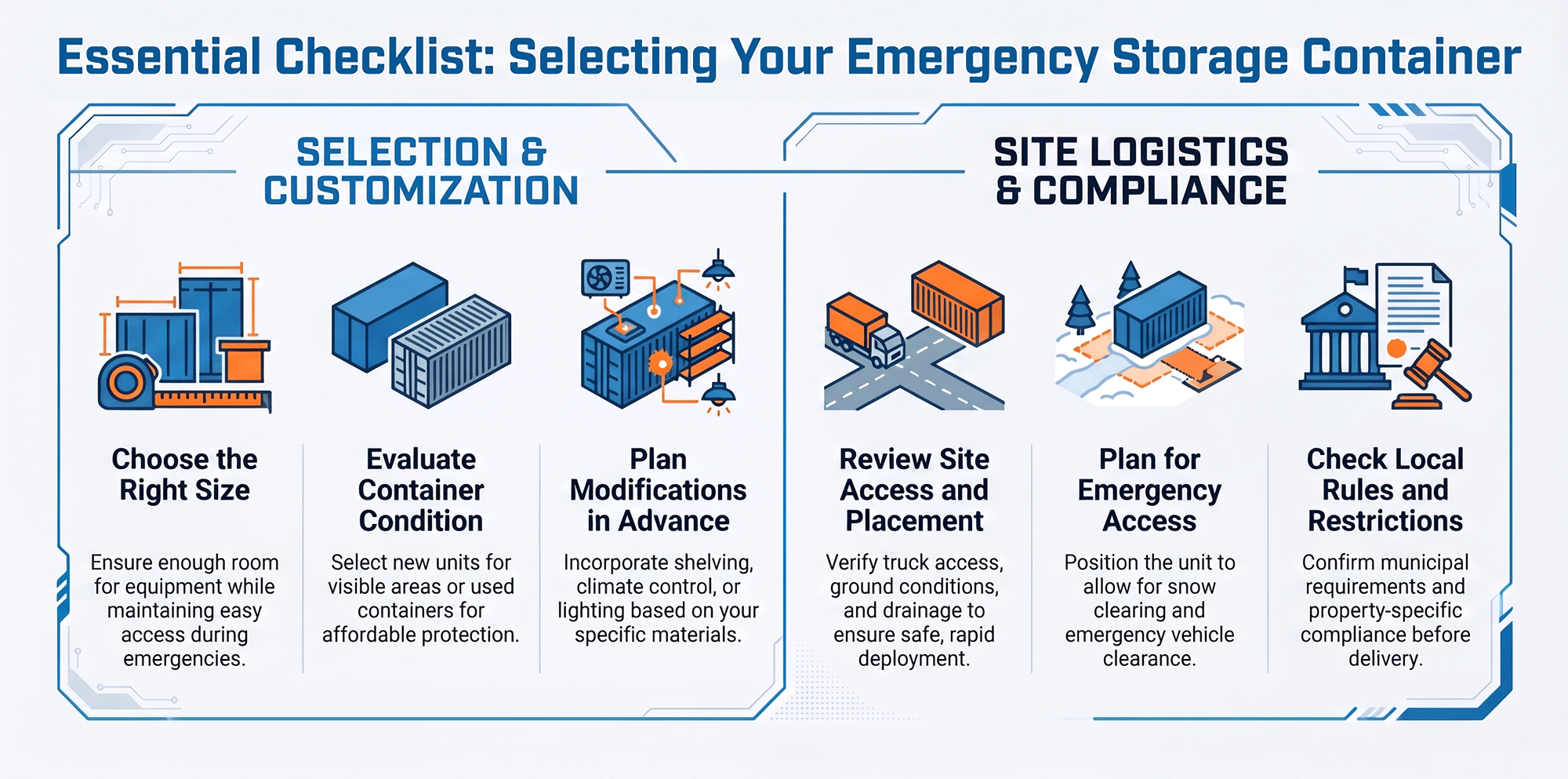
Choosing the right container starts with size. The unit needs enough room for supplies and equipment, but it also has to fit the property and remain accessible during an emergency. Door swing, truck access, ground conditions, and loading space should all be reviewed before delivery.
Condition matters too. Newer containers may be better for customer-facing areas or long-term use, while used wind- and watertight containers can work well for many storage needs. Secure Container’s page explains that new containers are often used for visible areas, while used containers can be durable and affordable for keeping contents safe.
Businesses should also consider modifications before purchase. Shelving can improve organization, while climate control may be useful for temperature-sensitive materials. Site placement should account for drainage, snow clearing, emergency vehicle access, and staff access.
Local rules may also affect where and how a container can be placed. Before buying, it is worth checking municipal requirements, property restrictions, and any industry-specific compliance needs.
Strengthen Your Disaster Plan with Emergency Storage Containers
An emergency storage container can help businesses protect supplies, secure backup equipment, respond faster after disruption, and keep recovery materials close to where they are needed. By choosing the right size, condition, placement, and modifications, businesses can make storage a stronger part of their continuity plan. Secure Container offers shipping containers for sale for organizations that want dependable disaster recovery storage.
Reach out to Secure Container today at (647) 560-2745 or click here to get in touch online.
Frequently Asked Questions
What is an emergency storage container?
An emergency storage container is a shipping or storage container used to hold supplies, tools, equipment, records, or materials needed before, during, or after a disruption. Businesses often use them as part of disaster recovery or continuity planning.
Are shipping containers suitable for long-term storage?
Yes, shipping containers can be suitable for long-term storage when they are in good condition and properly maintained. Businesses should check for door function, seals, ventilation needs, rust, and site drainage over time.
How quickly can a container be deployed in an emergency?
Deployment timing depends on availability, delivery location, site access, and the type of container required. A clear delivery area, stable ground, and early planning can help speed up setup when time matters.
Can containers be customized for disaster recovery needs?
Yes, containers can often be modified with shelving, lighting, ventilation, climate control, partitions, or added security features. These options can make disaster recovery storage easier to organize and more practical for specific business needs.
Leave a Reply